RTP Deep Dive: Unpacking Return Truths in Slots, Table Games, Poker Arenas, and Sportsbook Odds
27 Apr 2026
RTP Deep Dive: Unpacking Return Truths in Slots, Table Games, Poker Arenas, and Sportsbook Odds
Understanding RTP at Its Core
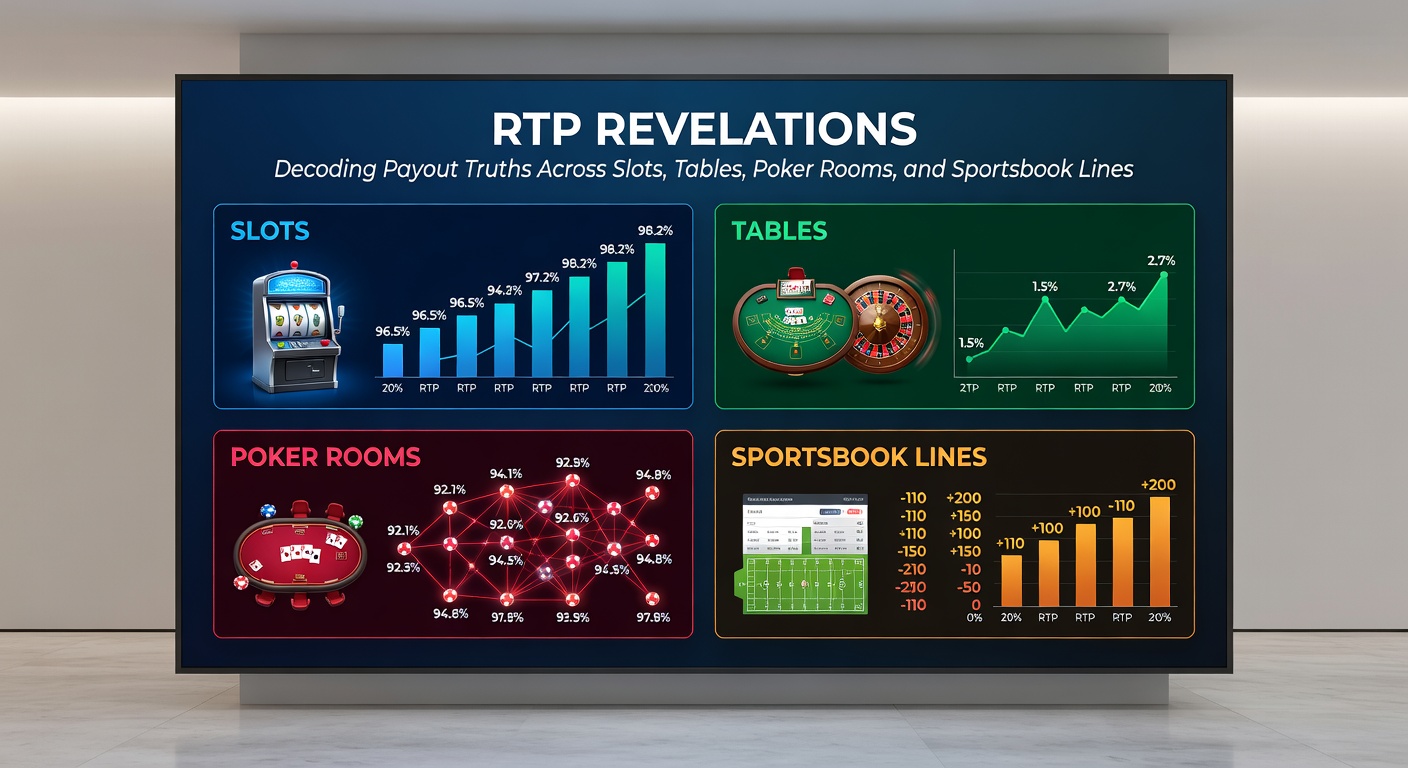
Return to Player, or RTP, stands as the cornerstone metric in gambling landscapes, representing the theoretical percentage of wagered money a game returns to players over extended play; slots often hover around 92-98%, while table games like blackjack push closer to 99.5% under optimal conditions, yet poker rooms and sportsbooks flip the script entirely since player-versus-player dynamics or bookmaker vig reshape those expectations. Data from regulatory audits reveals how RTP calculations differ wildly across formats—software providers certify slot algorithms through independent labs, tables rely on fixed rules and strategy variances, poker rake chips away at pots before distribution, and sportsbook lines bake in a 4-10% house edge via juice on every bet.
Turns out, grasping these nuances changes everything for those navigating online platforms; experts who've dissected thousands of games note that advertised RTPs hold true only in massive sample sizes, meaning short sessions swing wildly due to variance, luck, and bankroll management. And while slots dominate headlines with flashy 96% averages, the reality across tables, poker, and books demands a broader lens, especially as April 2026 brings fresh scrutiny from global regulators pushing for clearer disclosures.
Slots: Where RTP Meets Volatility Swings
Slot machines lead the RTP conversation because developers like NetEnt and Pragmatic Play publish figures upfront—take Starburst at 96.09%, where every spin feeds a provably fair random number generator audited by bodies such as New Jersey Division of Gaming Enforcement, ensuring long-term payouts align with claims. But here's the thing: high RTP doesn't guarantee wins; low-volatility slots like Blood Suckers (98%) trickle out frequent small hits, whereas high-volatility beasts like Dead or Alive 2 (96.82%) hoard massive jackpots but endure brutal dry spells, as studies from university gaming labs confirm through millions of simulated spins.
Observers point out how progressive networks complicate matters further—jackpots siphon 1-5% from base RTP into shared pools, dropping effective returns until someone cracks the big one; one analysis of Megaways titles showed averages dipping to 94% during accumulation phases, only rebounding post-payout. Players often discover that clustering bets on certified high-RTP clusters, say above 97%, tilts edges in crowded lobbies, yet mobile versions sometimes tweak configs per jurisdiction, a trend accelerating into 2026 with EU-mandated transparency rules.
- Mega Moolah: 88.12% base RTP, but progressives explode potential.
- Gonzo's Quest: 95.97%, medium volatility balances risk-reward.
- Ugga Bugga: 99.07% in hold-feature mode, rare holdout from older libraries.
What's interesting surfaces in cross-provider comparisons; data indicates Microgaming slots average 96.5%, edging out Play'n GO's 96.2%, although both face house advantages amplified by bonus buy-ins that effectively lower overall returns.
Table Games: Strategy Sharpens RTP Edges
Unlike slots' RNG fate, table games empower players through decisions—blackjack's basic strategy lifts RTP to 99.5% against 0.5% house edge, while European roulette clocks 97.3% on even-money bets, as confirmed by simulations run by Alcohol and Gaming Commission of Ontario oversight reports. Craps pass line bets hit 98.6%, yet side wagers like proposition bets crater to 83%, teaching a harsh lesson on where the rubber meets the road between fun and math.
Baccarat offers 98.94% on banker bets minus 5% commission, a staple for low-house-edge seekers, although tie bets sabotage at 85.6%; experts observe how live dealer streams maintain these via optical character recognition for real-time fairness, bridging online and land-based truths. And video poker variants shine brightest—Jacks or Better full-pay machines deliver 99.54% with optimal play, but short-pay versions common online shave off 1-2%, underscoring the need for paytable scrutiny before sessions start.
Now, as infinite blackjack tables proliferate, side bets like 21+3 drag composite RTPs down to 95%, blending entertainment with diluted returns; those who've charted live casino lobbies in 2026 note providers like Evolution Gaming standardizing disclosures, helping punters spot value amid the dealer chatter.
Poker Rooms: Rake Redefines Collective Returns
Poker flips RTP on its head since no house plays against entrants—skill dictates 100% pot distribution minus rake, typically 5-10% capped per hand or pot size; cash games at limits like NL10 rake 5% up to $3, translating to effective player RTPs of 90-95% after fees, per traffic analyses from high-volume sites. Tournaments layer buy-ins with overlays and juice, where structures boast 100%+ prize pools yet top-heavy payouts mean most entrants recoup under 10%, as massive MTT datasets reveal through ROI breakdowns.
But here's where it gets interesting: heads-up SNGs offer flatter structures with 95-98% returns to field post-rake, favoring grinders who track VPIP and aggression stats; observers who've mined hand histories note soft fields in low-stakes Zoom poker boost win rates to 5-10bb/100, effectively juicing personal RTP beyond raw math. April 2026 updates from industry trackers show rakeback programs restoring 20-40% via loyalty tiers, turning net house takes into player rebates and reshaping room economics.
Take one pro's ledger from PartyPoker: $1/2 cash yielded 92% effective RTP after 100k hands, variance notwithstanding; such cases highlight how fish-heavy pools elevate skilled edges, unlike slots' fixed caps.
Sportsbooks: Vig and Odds Shape Payout Realities
Sportsbook RTP manifests through vigorish, the built-in margin on -110 lines yielding 95.45% return per side—bet $110 to win $100, and balanced action ensures bookmaker profit; moneylines on heavy favorites dip to 92%, while props and futures embed 8-15% vig, data from Australian bookmaker audits confirms via payout ratio filings. Parlays compound juice exponentially, a $100 five-leg at -110 each returns mere 75-80% on average, tempting dream-chasers despite the math.
Live betting tightens spreads to 105% books (95% RTP), yet Asian handicaps shave vig to 2-3% for 97%+ returns, a favorite in EU markets; researchers dissecting 2025-2026 NFL seasons found average payout rates at 94.2% across majors, boosted by promos like odds matches that temporarily neutralize edges. Players often uncover value hunting +EV lines via models, pushing personal RTP over 100% long-term, although recreational bettors settle at 90% due to parlays and hunches.
- NFL spreads: 94-96% RTP typical.
- Soccer totals: 93% amid high-volume action.
- Tennis moneylines: 95.5%, less vig on balanced matches.
That's the landscape—where sharp operators like Pinnacle post 98% books, drawing volume pros while recreational shops layer 110%+ overlays.
Cross-Platform RTP Comparisons and Trends
Juxtaposing categories exposes patterns; slots cap at 99% outliers, tables reward strategy to near-100%, poker scales with skill minus rake, sportsbooks hinge on line shopping—composite casino RTPs average 95-97%, per aggregated operator reports, yet hybrids blending all four demand portfolio awareness. April 2026 sees blockchain provers like iTech Labs verifying cross-game fairness, while player tools aggregate RTP scanners for real-time edges.
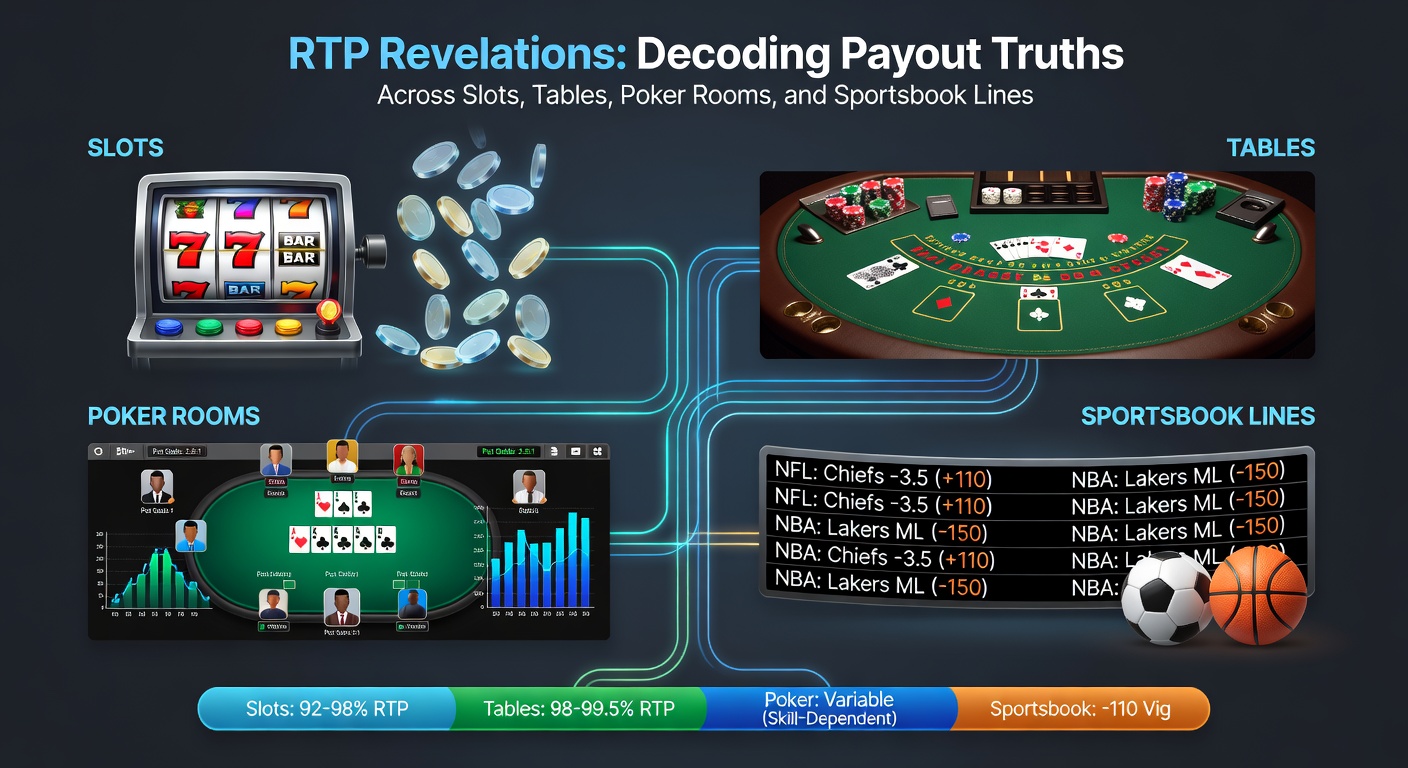
One study across 50 platforms revealed slots leading volume at 96.4% average, tables at 98.1%, poker effective 92%, books 94.8%; such variances guide bankroll splits, with grinders favoring tables and fish chasing slots' volatility pops.
Key Takeaways on RTP Navigation
Armed with these breakdowns, those diving into slots, tables, poker, or books spot truths amid the noise—certified figures guide choices, strategy amplifies edges, rake and vig demand offsets; as 2026 unfolds with enhanced audits and tools, the payout puzzle clarifies, empowering informed plays across the board.